Australia Xinhai Mining Services Pty Ltd
 1800017888
 info@xinhaiaustralia.com


Australia Xinhai Mining Services Pty Ltd
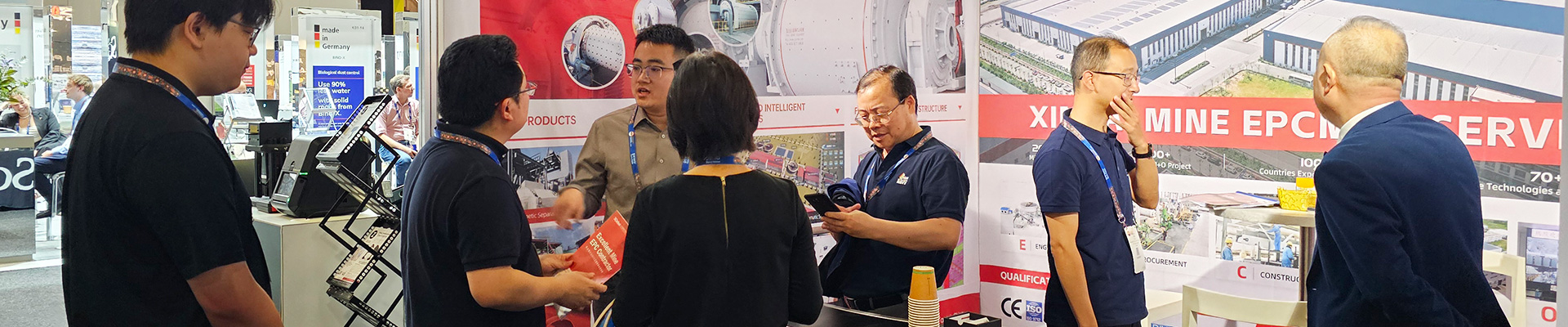
Over the past few days, I have been in Perth attending Africa Down Under 2026, an international mining conference focused on mining projects across Africa.
Xinhai was shortlisted for the AAMEG Award for Outstanding Social Development in an African Mining Project this year. So, before the awards ceremony, I took the time to prepare an acceptance speech.
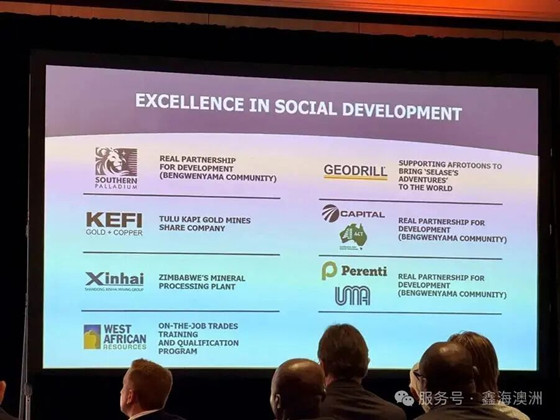
In the end, I never had the chance to deliver it on stage.
There was, naturally, a little disappointment.
But looking back, I don't think the speech went to waste.
The things I wanted to say were not polished words put together at the last minute for an awards ceremony. They came from what Xinhai has actually done in Africa over more than a decade, one step at a time.
So whether or not we brought home the trophy is one thing.
I still wanted to put those words down.
This is what I had originally prepared:
"Good evening, everyone.
On behalf of Xinhai Mining Group and Australia Xinhai Mining Services, I am deeply honoured to accept this AAMEG Award.
Our journey in Africa began more than a decade ago. Since entering the African mining sector in 2012 and commencing our early EPC projects in 2014, Xinhai has had the privilege of working across the continent with mine owners, local communities, governments and industry partners.
For us, Africa is not simply a market. It is an important part of Xinhai’s long-term global strategy.
Today, our involvement is also evolving. We are moving beyond traditional engineering and EPC delivery to become a longer-term partner in resource development — combining investment with metallurgical testwork, engineering, equipment supply, construction, commissioning and operational support.
We firmly believe that a successful mining project should create sustainable value not only for investors, but also for the countries and communities where we operate.
I would like to thank AAMEG for this recognition, our African partners for their trust, and our Xinhai colleagues around the world for their commitment and hard work.
We look forward to continuing this journey together and contributing to the next generation of successful mining projects across Africa.
Thank you very much."
The speech never made it to the stage.
But later, as I looked through photographs from the past decade, I began to feel that perhaps it had not gone to waste after all.
In a different way, those photographs told the same story.
Xinhai entered the African mining market in 2012.
Around 2014, our early EPC projects began to take shape.
More than ten years can be summed up in a sentence. Living through those years is another matter.
We started by bringing mineral processing technologies, equipment and engineering expertise from China to Africa. Over time, our capabilities expanded into a more integrated offering covering metallurgical testwork, engineering design, equipment manufacturing and supply, construction, installation and commissioning, and operational support.
But mining projects are never simply about delivering equipment to a site and building a processing plant.
The real work happens on the ground.
And on the ground, it is about people.
In the photographs from our projects, Xinhai engineers can be seen working alongside local employees at processing plants — providing operational training while navigating differences in language, culture and working practices.
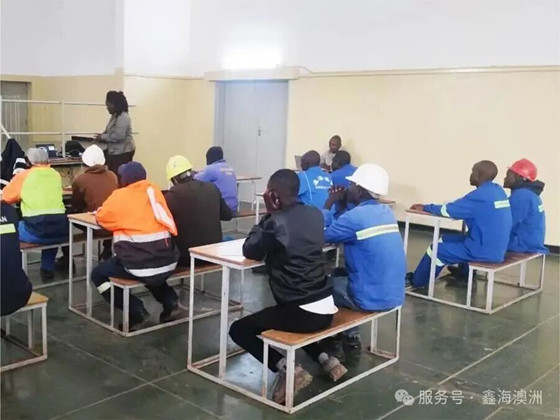
There are no conference-room presentations here.
No polished exhibition displays.
Just an Xinhai engineer, a group of local employees, and a production system that needs to work.
Some are teaching. Others are learning.
Some come from China. Others come from Africa.
The languages, cultures and ways of working may be different. But everyone is ultimately looking at the same equipment, the same processing line and the same goal:
to make the mine work.
After years of working on mining projects overseas, I have come to believe that the success of an EPC project cannot be judged simply by the day construction is completed.
There is another question that matters just as much:
What happens after the engineering team leaves?
Can the operation continue safely and reliably?
Can the local team identify problems, make decisions and keep the plant running?
That is why training, skills transfer and local workforce development matter so much.
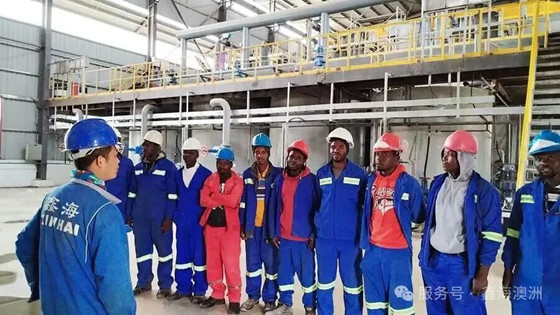
The classroom may be ordinary.
The desks and chairs may not be particularly impressive.
But what happens inside that room can have a lasting impact on the future of a mine.
Why is a piece of equipment operated in a particular way?
How should changes in process conditions be identified and assessed?
When something goes wrong, how should the problem be diagnosed?
Why must safety procedures be followed every time?
These are capabilities that cannot depend indefinitely on engineers being flown in from China.
A mature project is one where, eventually, the external engineering team can step away — and the local team has the knowledge and confidence to keep the operation running.
For me, that is an important part of what successful project delivery means.
There are a few other photographs that I particularly like.
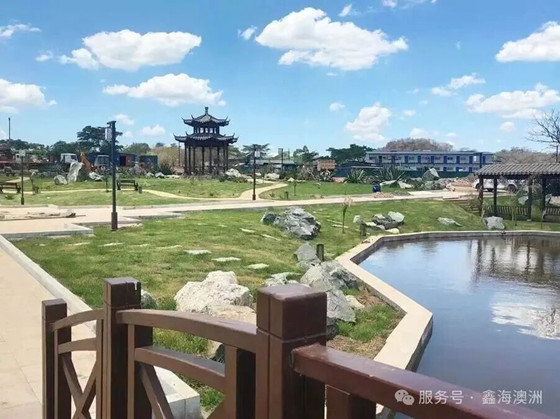
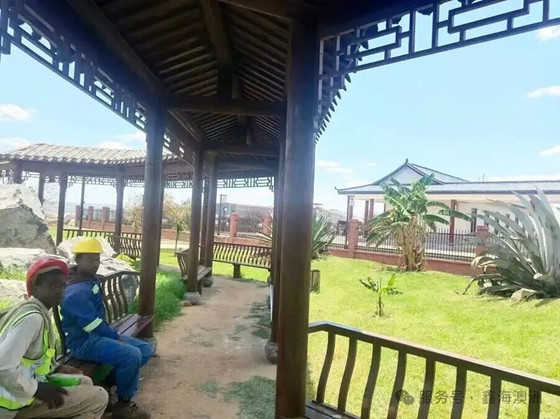
The living environment around the mine.
Chinese-style landscaping.
Pavilions where workers can sit and rest.
Green spaces.
Water features.
Residential areas.
If you were not told that these photographs were taken at a mining site in Africa, you might not immediately think of a mine at all.
Of course, an economically viable mining project must generate returns for its investors.
That is fundamental.
But a mine is more than a financial model.
Once construction is complete, people will work there.
Once operations begin, people will live there.
And when a project continues for ten, twenty years or even longer, it inevitably becomes part of the surrounding community.
That is why I believe a successful mining project should create value beyond the balance sheet.
Investors should benefit.
But so should the host country, local communities and the people who make the project possible.
Xinhai’s role in Africa has also changed over the years.
In the past, we were primarily known as a provider of mineral processing technology, mining equipment and EPC services.
Today, we are taking that role further.
From engineering contractor to long-term partner in resource development.
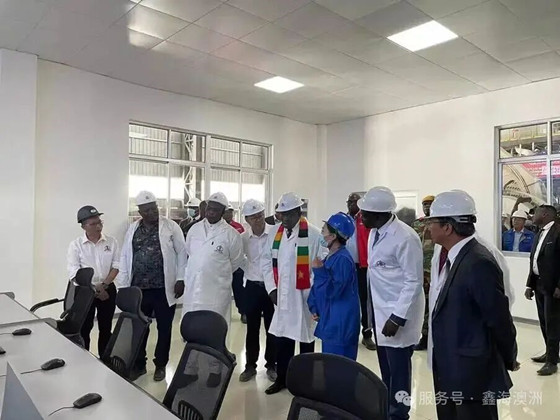
A visit by the President of Zimbabwe to a Xinhai gold mining project is one example of how our involvement in Africa has continued to develop.
Looking ahead, Xinhai aims to participate in projects not only through metallurgical testwork, engineering design, equipment supply, construction and commissioning, but also through an investment + EPCMO model.
The idea is simple:
participate earlier, stay longer, and share more closely in the long-term success of the project.
That means moving beyond the traditional approach of building a project and moving on.
It means studying the resource together.
Optimising the development plan together.
Building the project together.
And, ultimately, facing the challenges and opportunities of operating it over the next ten years — and beyond — together.
If I had to choose one photograph from all those years, it would probably be this one.
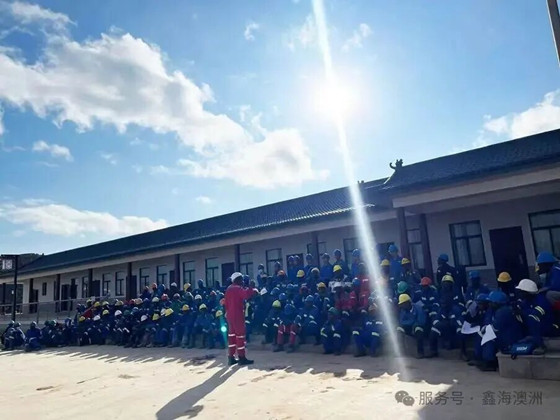
More than a hundred local employees taking part in a group training session in front of the residential area.
There is no ribbon-cutting ceremony.
No one is standing behind a podium.
There is no trophy.
Just more than a hundred people in workwear and safety helmets.
For many of them, this mine may have been their first opportunity to receive structured professional training.
For some, it may have been their first experience with modern mineral processing equipment.
For others, it may have been their first long-term opportunity to build a career in the mining industry.
That photograph represents something that is difficult to capture in a project completion report.
It represents people gaining skills, experience and opportunities.
The processing plant will remain.
The equipment will remain.
The roads and infrastructure will remain.
But perhaps the most valuable thing a project can leave behind is something less visible:
people and capability.
If, after a project is completed, there is a local team that understands technology, safety and production — and is capable of independently operating a modern mining operation — then the value created by the project has already gone beyond the project itself.
The infrastructure is important.
But capability can last even longer.
We did not ultimately take home the AAMEG Award.
But being shortlisted was already meaningful recognition.
And after looking back through these photographs, I find that I feel more grateful than disappointed.
Because an award belongs to one evening.
A mine has to operate for many years.
More than a decade ago, Xinhai began its journey in Africa.
Today, we are still there.
From equipment supply to EPC.
From EPC to EPCMO.
And from engineering services towards resource investment and long-term joint development.
The journey is far from over.
So there is one final line from the speech I never got to deliver that I still want to share here:
For us, Africa is not simply a market. It is an important part of Xinhai’s long-term global strategy.
We did not bring home the trophy this time.
But the projects we have built in Africa over more than a decade.
The teams we have helped develop.
The trust we have built with our partners.
And the mines that continue to operate today.
Perhaps these are what a genuine acceptance speech looks like.
